 (315) 853-3798
 newmanle315@gmail.com
February can make a paver walkway feel a little unpredictable. One day it looks fine, then the next morning there is a slick film of ice, or a raised edge that was not there last week. Most homeowners want the same thing: a safe footing now and pavers that still look good once the spring melt arrives. This blog walks through what actually helps, so keep reading and take the stress out of winter and early spring.
Improving Paver Grip During Snow and Thaw Cycles
Hardscaping Moves That Cut Slips On Icy Pavers
When snow gets packed down, pavers can become slippery fast, especially in shaded areas near the house. Hardscaping surfaces do not all behave the same, even if they look similar from the street. A smoother paver face may look clean in summer, but in February it can hold a thin layer of ice that feels like glass. That is why texture matters, and why it is smart to notice which parts of the walkway get morning shade. If the walkway leads to a side door, garbage bins, or the steps where everyone carries groceries, those spots deserve extra attention.
Snow-removal style also affects how pavers handle winter. A metal shovel edge can catch the corner of a paver and chip it, and the damage often hides until the snow clears. A plastic shovel, a snow blower skid set correctly, or a rubber-edged pusher helps protect the pavers while still removing the path. It also helps when the walkway has strong edge restraints, because edges keep pavers from spreading when snow piles are pushed to the side. If the walkway gets plowed by a service, it is worth checking that the plow blade is not scraping directly on the surface.
Drainage Habits That Stop Refreeze Before Dawn
Winter safety is not only about what lands on top of the pavers, but it is also about where water goes after it melts. Even a small puddle can refreeze overnight, turning into a smooth patch that is hard to see. Drainage problems often show up as “mystery ice,” where the rest of the walkway looks fine, but one section stays slick. Downspouts that empty near the walkway, or a sloped driveway that sends meltwater across the path, can cause that exact issue. If water keeps crossing the same section, the surface can also collect fine grit, making the joints messy.
A simple way to think about drainage is this: water should move away from the walkway, not across it or under it. If a homeowner sees a shiny strip of ice in the same place each morning, that is a clue, not bad luck. Sometimes the fix is as minor as extending a downspout or adjusting a splash block, and other times it means regrading the soil nearby.
Preventing Paver Shifts From Winter Stress
Hardscaping Edges That Keep Pavers Locked Down
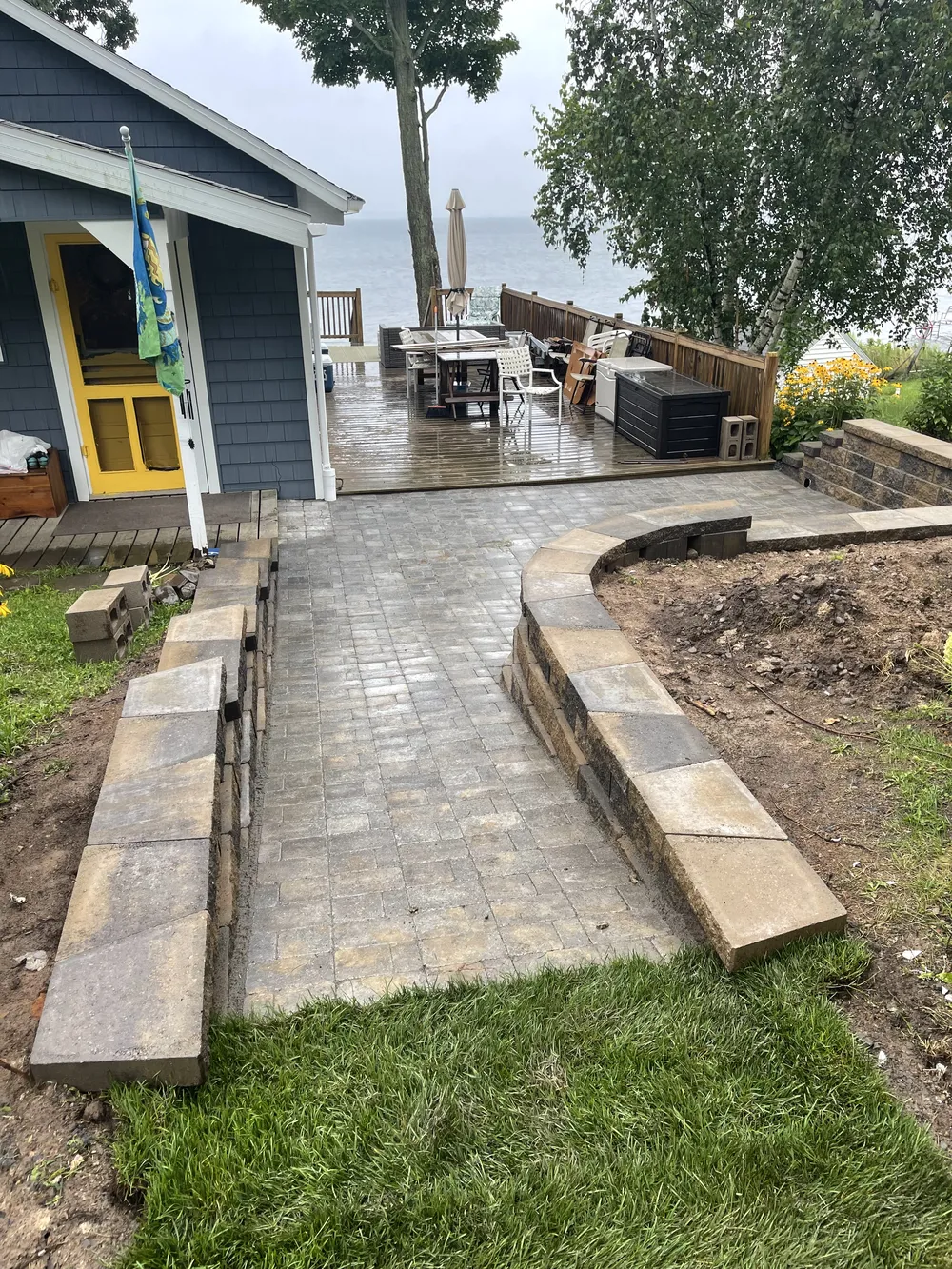
Freeze-and-thaw cycles can shift a walkway in ways most people do not notice until a toe catches an edge. When water gets under pavers and freezes, it expands and can lift parts of the surface. Then it thaws, settles, and leaves a low spot that often becomes the next place to collect ice. This is why expert installations matter so much with pavers, because what is underneath is doing the real work. A strong base, proper compaction, and clean layers of aggregate help the surface remain even as the ground undergoes winter changes.
Edges are another big deal, and they are part of hardscaping that gets overlooked. Without solid edge restraints, pavers can slowly drift outward, especially where snow gets piled or where the walkway turns. Once the edges loosen, joints open up, joint sand washes out, and the surface can start to wobble. That wobble is not just annoying; it is a safety risk when someone steps down with boots full of snow. In many cases, a few reset pavers and a refreshed joint fill can bring the walkway back, but repeated movement may indicate that the edge or base needs a deeper fix.
Drainage Under Pavers That Stops Spring Heaves
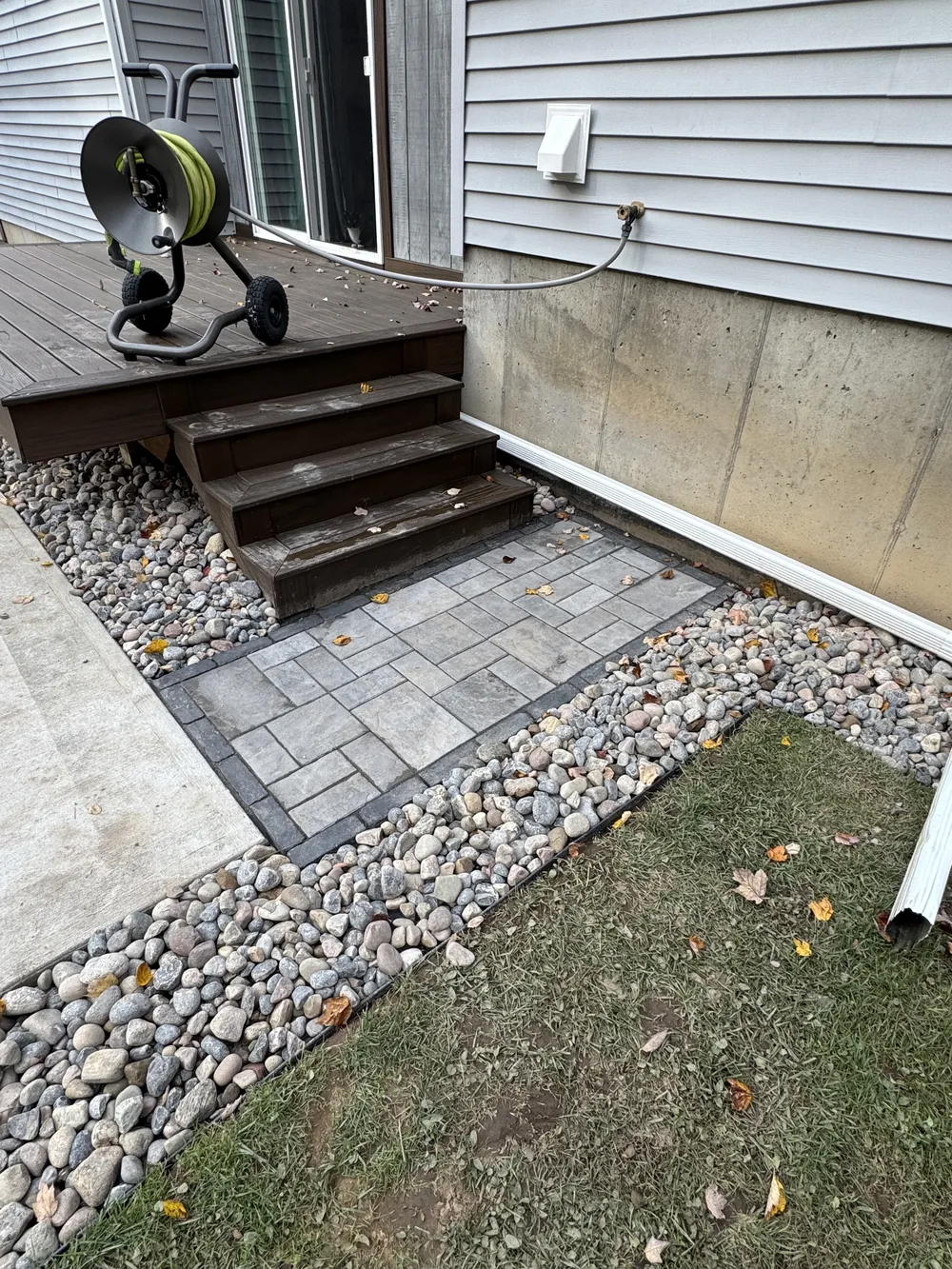
Drainage under the walkway is what helps prevent heaving, shifting, and sinking, even when the weather swings from freezing nights to warm afternoons. If water is trapped in the base, it becomes a repeating winter problem because it freezes, expands, and pushes things around. A well-built paver system uses layers that let water flow through and away, irather thancollecting in one spot. That does not mean the area should stay wet; it means the water has a path out. When drainage is done right, pavers can handle a lot of seasonal stress without turning into a bumpy mess.
In late winter, homeowners can spot early hints that drainage below the walkway is not doing its job. If joints stay wet for days, if a section feels soft underfoot, or if a slight dip keeps coming back, water is likely sitting where it shouldn't. This is also where landscaping around the walkway matters, because soil that slopes toward the path can funnel meltwater right into the base. If a homeowner has a fire pit area off the walkway, that foot traffic tends to pack snow down and create more meltwater in one zone, so the base needs to be strong there, too. Sometimes, a simple regrade and a slight drainage improvement protect both the walkway and the surrounding yard. Other times, it takes pulling up pavers, rebuilding the base, and making sure water has a real exit route.
Managing Paver Drainage During Spring Melts
Hardscaping Fixes For Loose Pavers After Frost
By the time frost starts letting go, the walkway often shows the wear that was hidden under snow. Loose pavers, chips along edges, and joints that look washed out are standard after a harsh winter. Homeowners sometimes assume the pavers are failing, but the fix is often straightforward when handled early. Resetting a few problem spots, replacing cracked pavers, and leveling the surface can make the walkway feel safe again. It also protects the surrounding hardscaping, because small dips can send water in the wrong direction, creating new trouble.
Spring is also when a homeowner should look closely at joint sand, because joints are part of what keeps pavers working as one surface. If joints are empty or uneven, pavers can shift more with foot traffic. That shift can create tiny gaps between pavers, which are annoying in summer and risky when cold nights return, and things refreeze. Many homeowners use polymeric sand for joints because it helps resist washout, but it still needs correct installation and the right weather conditions to set well. If a homeowner is unsure what type of joint material is present, it is worth seeking guidance before adding anything.
Drainage Checkups Before The Big Melt Arrives
The spring melt can look harmless, but it can push a lot of water through one yard in a short time. Drainage should be checked before that happens, not after the first big puddle appears. A walkway that sits slightly below the surrounding soil can collect runoff, leaving the pavers wet longer than they should. That moisture is what leads to refreeze at night, which can catch people off guard when temperatures drop again. It is especially common near garage entries and front steps where the sun hits during the day, and shadows take over early.
A drainage checkup can be simple, and it often starts with watching where water travels during a thaw. If water runs off the roof and lands near the walkway, that downspout should be redirected. If the yard slopes toward the pavers, small grading changes can divert water without altering the space's appearance. This is also a good time to consider how the walkway connects to the rest of the property, including landscaping beds that may trap runoff and direct it toward the path. Some homeowners also plan new features like fire pits in spring, and it is smart to address drainage before adding more traffic and more hardscaping.
Conclusion
A paver walkway should not feel like a winter obstacle course, especially in February when the snow and ice keep changing week to week. The best results come from good surface habits, smart drainage, and a hardscaping base that is built correctly from the start. If the pavers are shifting, holding water, or becoming slick in the same spots, it is usually a fixable problem. We at Newman Landscaping and Excavating, LLC, focus on tailored solutions, expert installations, and comprehensive services that protect your walkway through winter and into spring. If you want help getting your pavers back to a safe, stable state, contact us, and we will talk through the best next step for your property.
