 (315) 853-3798
 newmanle315@gmail.com
Landscaping Begins With A Full Yard Read After Winter Damage
Why Lawn Mowing Can Wait A Little
Many homeowners assume the first spring job is lawn mowing. That feels natural because the grass starts to change color, the snow pulls back, and the whole yard looks like it needs a fresh start. But early spring landscaping is more about reading the site than cutting it. A lawn can look shaggy even when it’s too wet, too soft, or too matted to handle traffic well. In March, that is common after a long Central New York winter, especially where snow sat the longest and the ground thawed unevenly.
The better first step is a slow walk across the property. A homeowner should notice where the lawn feels spongy, where salt splash browned the edge near walks or drives, and where snow mold may have left pale, pressed-down patches. Cool-season grasses do their best growing in spring and fall, so raking matted grass in spring is recommended. That makes early cleanup useful, but it also shows why lawn mowing is not always the first move. If the turf is still wet, cutting too soon can tear the grass, leave clumps, and create wheel marks that last much longer than anyone expects.
Why Mulching Should Follow Cleanup
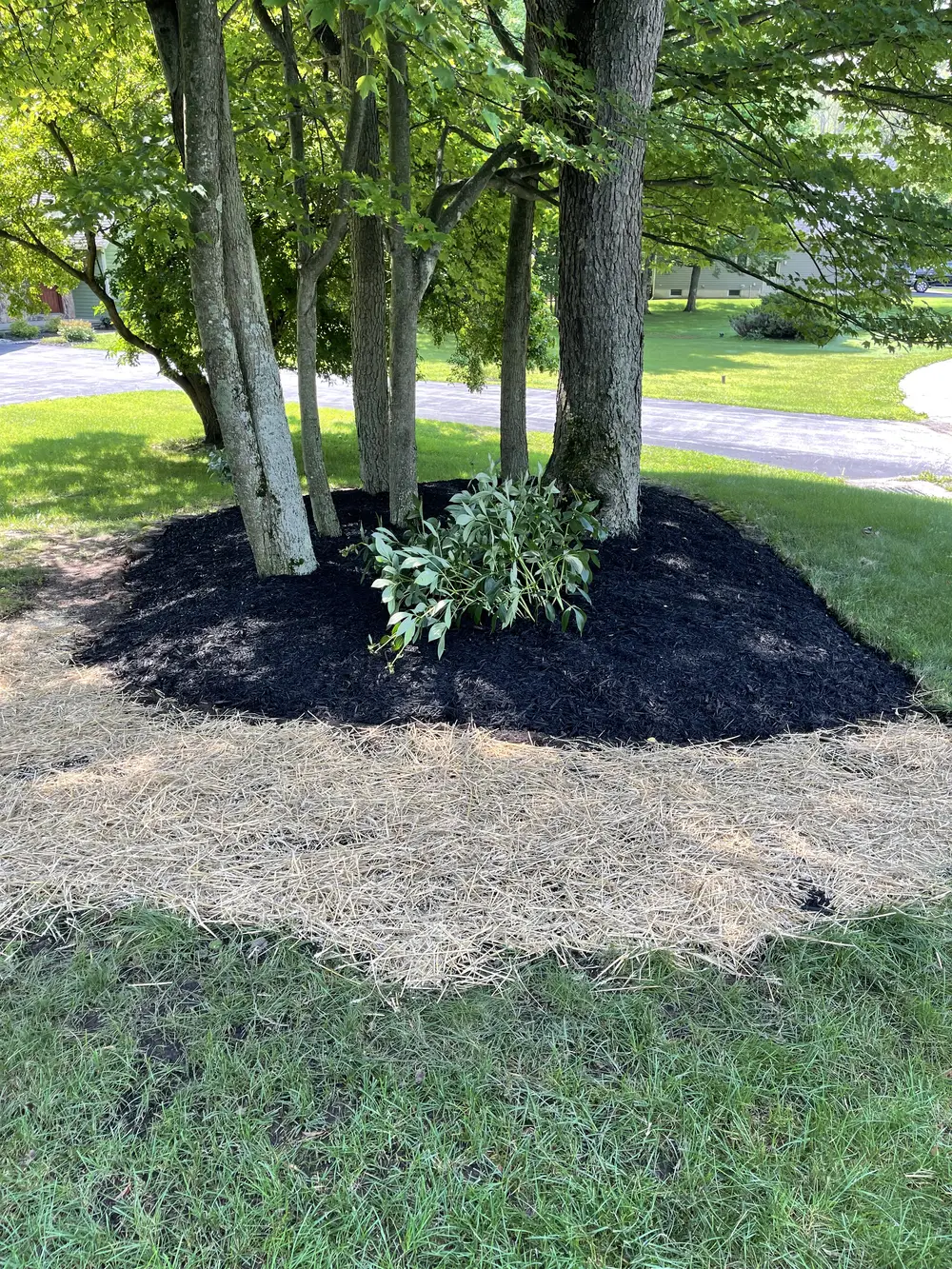
Fresh mulching is another spring job people reach for right away because it delivers quick color and makes a bed look finished. There is nothing wrong with that. The problem comes when the bed is covered before winter debris is removed, perennials are cut back, and the soil surface is checked for heaving or washout. In Utica, NY, that matters because winter does not always leave planting beds flat and neat. It can shift the edge, expose roots, and push old mulch into piles where meltwater carried it.
Mulching makes the most sense after the cleanup, as it tells a landscaper what the bed actually needs. Sometimes the bed only needs a light top-up. Sometimes it needs edging corrected first, or compacted areas opened up, or a low spot filled where water sat. Good landscaping starts by restoring the bed’s shape and health, then using mulching to hold moisture, limit weeds, and improve the finished look. It also helps to keep mulch away from trunks and crowns, because Cornell and extension guidance warn against piling it against woody plants where it can trap moisture and create trouble right at the base.
Landscaping Works Better When Soil And Water Are Checked First
Lawn Mowing Won’t Fix Soggy Soil
When a yard has been under snow for months, the lawn problem is not always the lawn itself. It is often the soil underneath. That is why smart spring landscaping checks drainage before it tries to fix appearance. If water sits in one corner after every melt, if footprints hold for hours, or if the grass near the downspout looks thin every year, those are site clues, not random bad luck. A yard in Westmoreland, NY, can look green at a glance and still be dealing with compaction and poor drainage left over from winter traffic and snowmelt.
That kind of issue does not improve because the mower came out earlier. In fact, compaction can reduce air in the root zone and worsen drainage, which is why aeration becomes part of the conversation under the right conditions. Cornell’s lawn care guidance notes that thin lawns may benefit from overseeding after core aeration, and Penn State explains that aeration removes plugs from the turf to relieve compaction and create larger pores. That tells homeowners something useful: the first real spring win may be to correct the root-zone problem rather than forcing a cosmetic fix on top. In practical landscaping terms, the ground has to function before the surface can really recover.
Mulching Beds After Repairs Makes Sense
The same logic applies to planting beds and foundation areas. If runoff cuts a channel through the bed, if the edge washed into the lawn, or if soil piled against the house over time, fresh mulching should wait until those conditions are corrected. Otherwise, the new layer can hide the issue without solving it. That is especially true around walks, patios, and pavers, where spring puddling can signal a grading problem that will keep recurring with every hard rain.
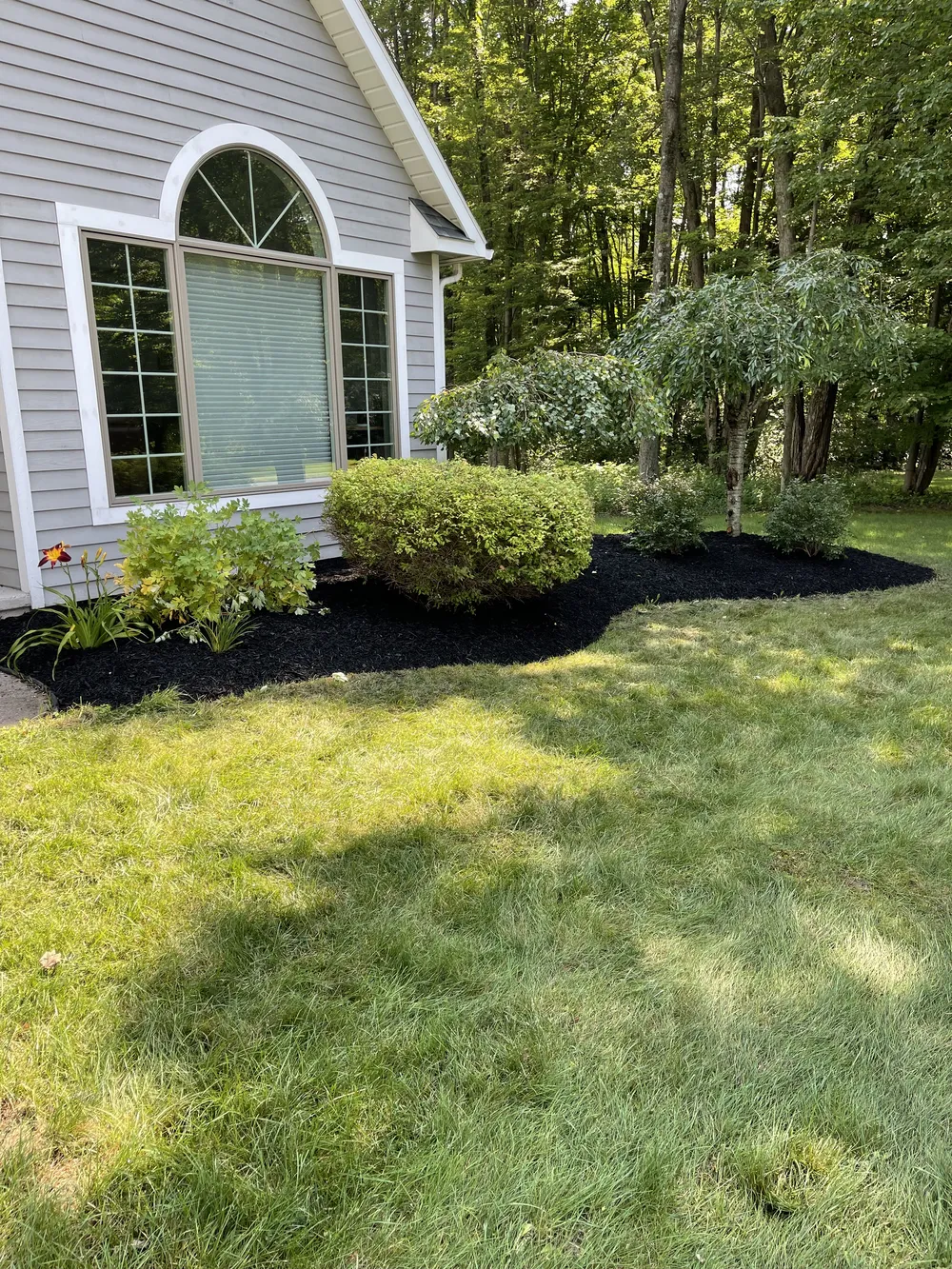
Once the shape is corrected, mulching becomes useful again for all the right reasons. It helps conserve moisture, improves appearance, and gives the bed a cleaner finish, but only when it is laid at a sensible depth and kept off stems and trunks. A thick pile pushed against the base of a tree may look full for a week, then cause a decline that takes much longer to notice. Good landscaping avoids that by treating mulch as a support layer rather than a cover-up. It is one of those details that separates an expert installation from a rushed spring cleanup.
Landscaping In March Needs Timing More Than Quick Action
How Lawn Mowing Fits Into Recovery
None of this means lawn mowing should be put off forever. It just means the timing has to make sense. Once the lawn is dry enough to walk on without sinking, the matted areas have been lightly raked, and the first flush of growth has begun, mowing becomes part of healthy spring landscaping. Cornell recommends mowing high, and its turf guidance also notes that spring brings a rapid flush of top growth, which is why mowing often enough to avoid heavy clumps is important.
That matters in Utica, NY, because spring often shows up in pieces. One stretch feels mild, then the ground hardens again overnight, then another wet week follows. A homeowner who waits for the lawn to be ready usually gets a better result than one who reacts to the first warm afternoon. The cut is cleaner, the turf handles traffic better, and the whole property starts to look cared for instead of merely chopped down. Good landscaping in early spring is rarely about speed. It is about reading the yard correctly, then acting in the order the site is asking for.
Where Mulching And Pavers Help Most
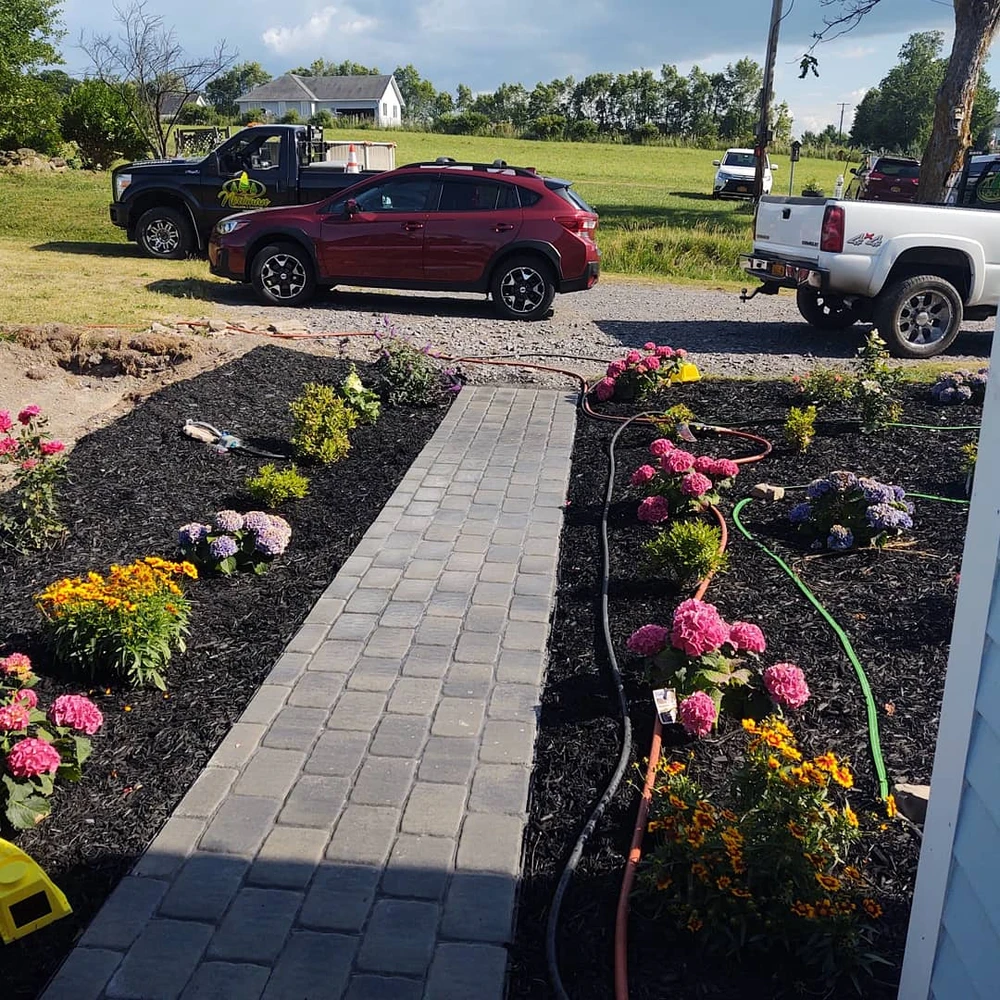
After cleanup, drainage review, and early turf recovery, the visual work starts to make more sense. This is the point where mulching can sharpen the beds, where shrub lines start to look finished again, and where damaged edges can be reset rather than hidden. It is also when small hardscape issues show themselves. Frost can shift pavers just enough to create a lip or a wobble, and spring is a smart time to catch it before someone trips or the pattern starts to separate further.
Homeowners in Westmoreland, NY, often want the whole yard to look finished the moment the snow is gone, and that feeling is easy to understand after months of winter. But the best landscaping does not start with the most visible task. It starts with the task that makes the rest of the work last longer. Once the soil is behaving, the turf is drying, and the beds are cleaned and shaped, mulching has real value, lawn mowing fits into the recovery instead of fighting it, and even small fixes around pavers feel like part of a plan instead of scattered patchwork. That is when spring work stops feeling reactive and starts feeling well-built.
Conclusion
After a long winter, the real first step in spring landscaping is not the mower or a fresh load of mulch. It is a careful read of the yard, the soil, and the water movement that winter left behind. From there, the right next step becomes much easier to see, whether that means cleanup, drainage corrections, bed repair, lawn recovery, or a fresh finish. We at Newman Landscaping and Excavating, LLC, believe outdoor work should be done in the order that delivers the best long-term results, and we are here to help with tailored solutions that fit the property. Reach out to us today if it is time to get the yard ready for spring the right way.
