 (315) 853-3798
 newmanle315@gmail.com
How Water Pressure Impacts Retaining Walls in Spring
Drainage: What Hydrostatic Pressure Does
People often assume the weight of soil is what breaks a wall, and soil does matter, but water changes the whole picture. Hydrostatic pressure is the force exerted by water when it is trapped, and it continues to exert pressure until it has a place to go. When the wet soil behind retaining walls remains saturated, it can weaken the soil’s ability to hold itself together, increasing the likelihood of movement. This is why a wall can start to shift after a wet stretch, even if it handled the same slope for years.
In early March, the problem can get worse because if water collects behind retaining walls and the soil freezes at night, the expanding ice can exert extra pressure, then it relaxes when things warm up again. That repeated push-and-release is tough on mortar joints, block connections, and even well-built walls that never got proper water relief behind them. Homeowners may notice a damp line on the wall’s face or a darker patch of soil that never seems to dry out. It helps to take those clues seriously, especially early in the season when the ground is still changing week to week.
Hardscaping: Early Warning Signs On Walls
Some warning signs show up slowly and are easy to miss if someone only looks at the wall straight on. A good habit is to stand off to the side and look down the length, because a slight bow is easier to see from an angle. Another clue is separation at the wall’s meeting with a step, a landing, or the edge of a patio, since those joints indicate early movement. If the top row looks uneven, or the capstones no longer line up the way they used to. Retaining walls can also show new gaps between blocks that were not there last year. Those are early signs, and early signs are the best time to act.
It is also worth paying attention to what happens above the wall. If a downspout dumps water near the backfill, or a slope funnels meltwater straight toward the wall, the wall is being asked to handle more than soil. In Utica, NY, yards with shaded corners often hold snow longer, and that later-melting snow can keep feeding water into the same area long after the rest of the yard looks dry. Retaining walls in those spots can feel like they are failing “for no reason,” but the reason is usually water that has nowhere to move.
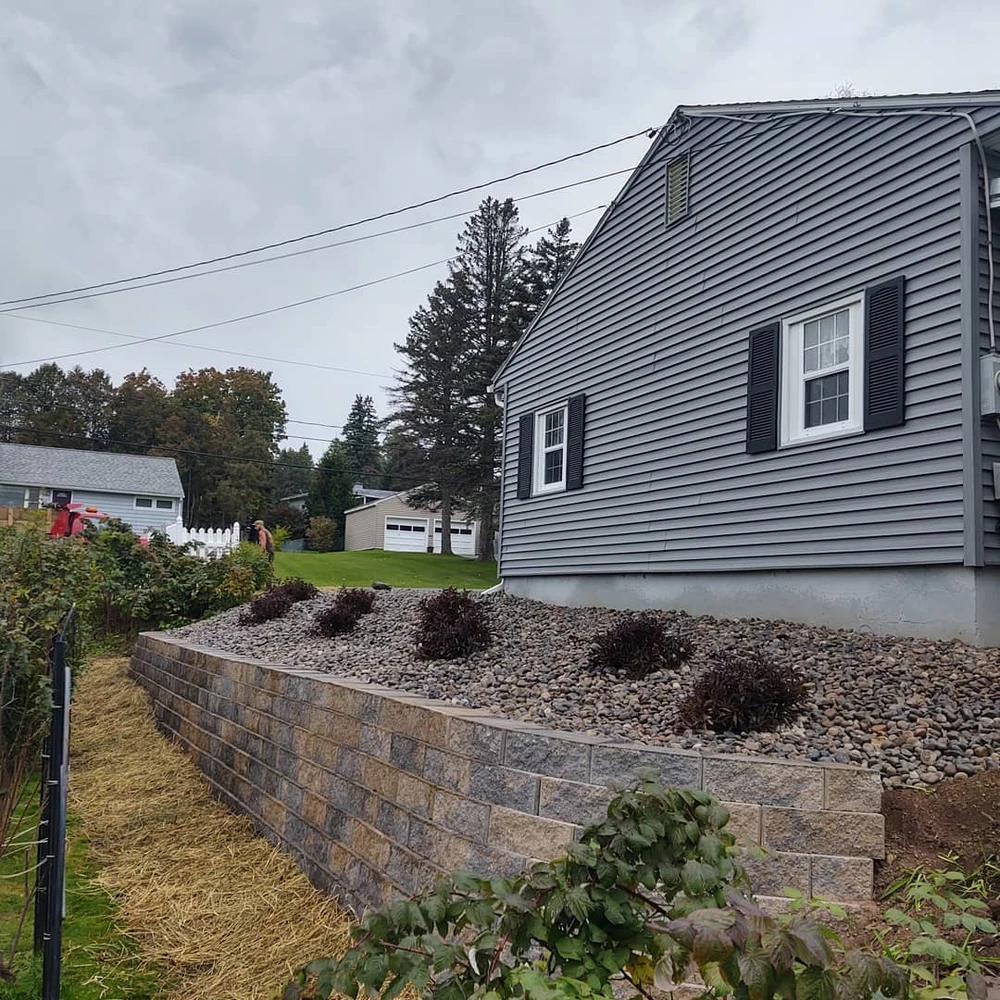
Essential Drainage Components for Retaining Walls
Hardscaping: Backfill That Lets Water Escape
A wall’s strength is not only about the blocks or timbers. The material behind it matters, and this is where many walls go wrong, especially when a project looks simple on paper. Dense soil packed right behind retaining walls can trap water like a bowl, and once it is wet, it stays wet. Clean stone behind the wall creates an open space for water to move downward rather than push outward, and that one choice can extend a wall's lifespan. Filter fabric also plays a big role because it keeps fine soil from migrating into that stone and clogging it over time.
This is where hardscaping planning pays off, especially for yards that connect a wall to walkways, steps, or patio spaces. Suppose the top of the wall is meant to meet a clean paver border, the base beneath that area needs to stay stable, not muddy and soft. If the backfill is incorrect, water can undermine the base and cause settlement, and then everything above it begins to show cracks and shift. Retaining walls often fail in a way that makes it look like the wall was “too weak,” when the real issue was the wet soil behind it pressing against and moving the wall. A good build treats the backfill and base as part of the structure, not as leftover dirt to push into place.
Drainage: Pipes, Outlets, And Cleanouts
Water needs an exit route, and the best plan is to build that route before the wall ever goes up. Many wall designs include a perforated pipe at the base that collects water and carries it out to daylight, and it only works if the outlet stays open. If an outlet is buried by mulch, soil, or later landscaping, the pipe becomes useless, and pressure starts to build again. That means a wall can have the “right parts” and still fail if nobody can find the outlet or keep it clear.
In Rome, NY, many properties have grade changes that direct water toward one side of the yard, especially where driveways or sidewalks direct runoff. If a wall sits in that flow line, it will collect water behind it unless the water is redirected or captured. Retaining walls in these situations should never be built as a dry stack of blocks with dirt packed behind them, because that design basically invites water pressure to show up later.
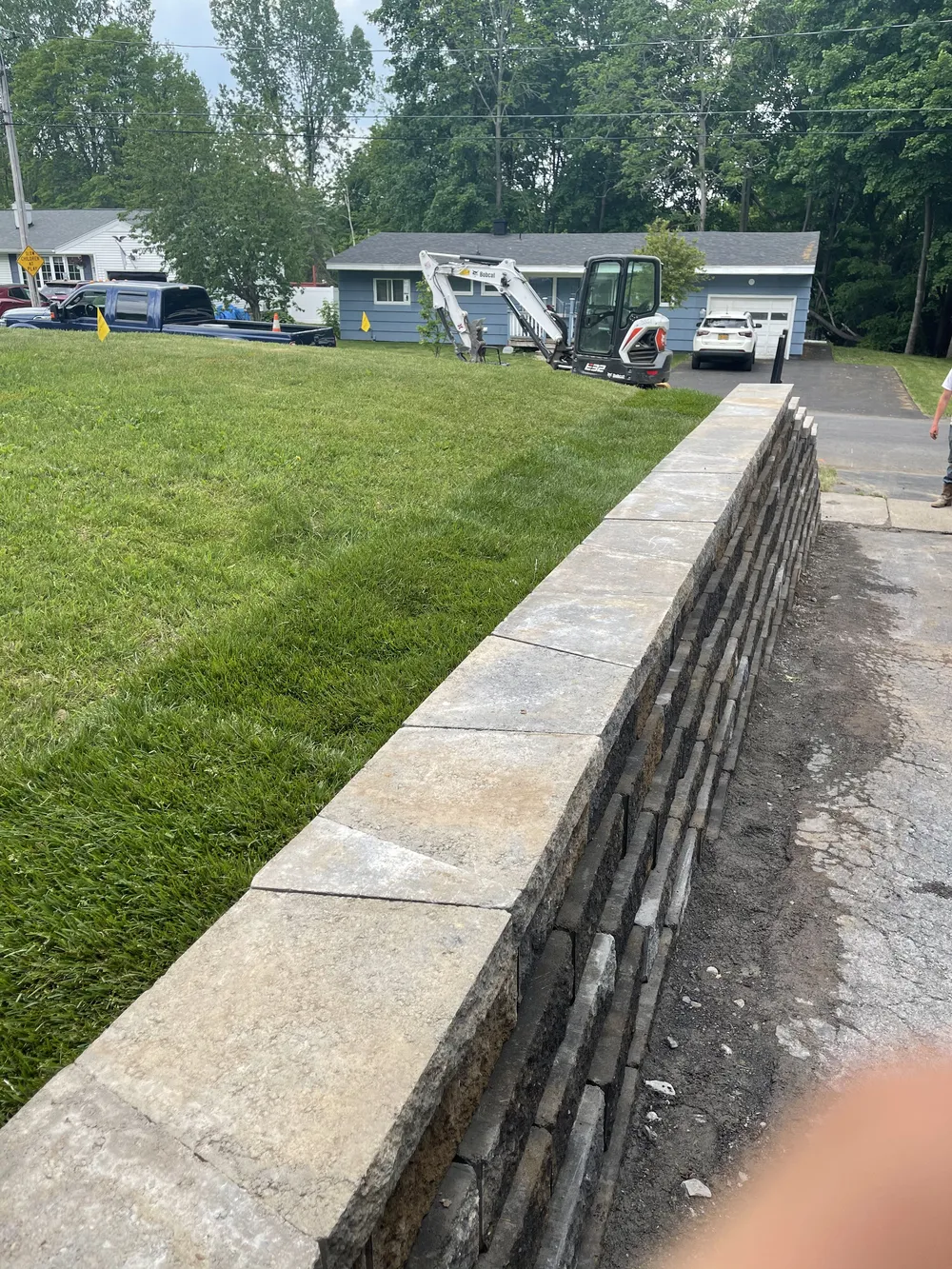
Post-Thaw Maintenance for Retaining Walls Drainage
Identifying Drainage Blockages in Retaining Walls
Once spring rains start, homeowners can learn a lot by watching how water behaves around the wall. If puddles sit along the top edge of the wall, that water is likely slipping down behind it. If the soil above the wall stays soft and spongy, it may be holding water rather than allowing it to drain away. Retaining walls can also show a wet stain on the face or mineral residue that appears after water evaporates. None of that automatically means failure, but it does mean water is traveling through places it should not. Catching that early is far better than waiting for a visible shift.
Another helpful check is to look for where water should be exiting. If there are weep openings and they never drip after a storm, that can be a clue that water is trapped or that those openings are blocked. If the outlet pipe is buried, crushed, or clogged, the system cannot perform its job. Retaining walls built near lawn areas can also suffer when spring cleanups pile debris along the base, since it can cover outlets and trap wet leaves against the wall. It is not dramatic, but it adds up over time.
Hardscaping: When To Repair Or Rebuild
Some walls only need a targeted repair, and others are telling the homeowner it is time for a rebuild with a better water plan. If a wall has shifted slightly but the base is still solid, a professional can sometimes reset sections and correct the backfill and water exit behind it. If the wall is leaning enough to change the grade above, a rebuild may be safer because that lean is a sign the forces behind it are still winning.
It is also worth considering how the space is used, not just how it looks. If the wall supports a seating area, a walkway, or a backyard spot for family nights with fire pits, stability matters for safety as much as appearance. A rebuild can be an opportunity to correct grading, improve the base, and make the area feel more usable rather than stressful. Retaining walls can absolutely be part of a beautiful yard, but beauty should not come at the cost of constant worry after every storm.
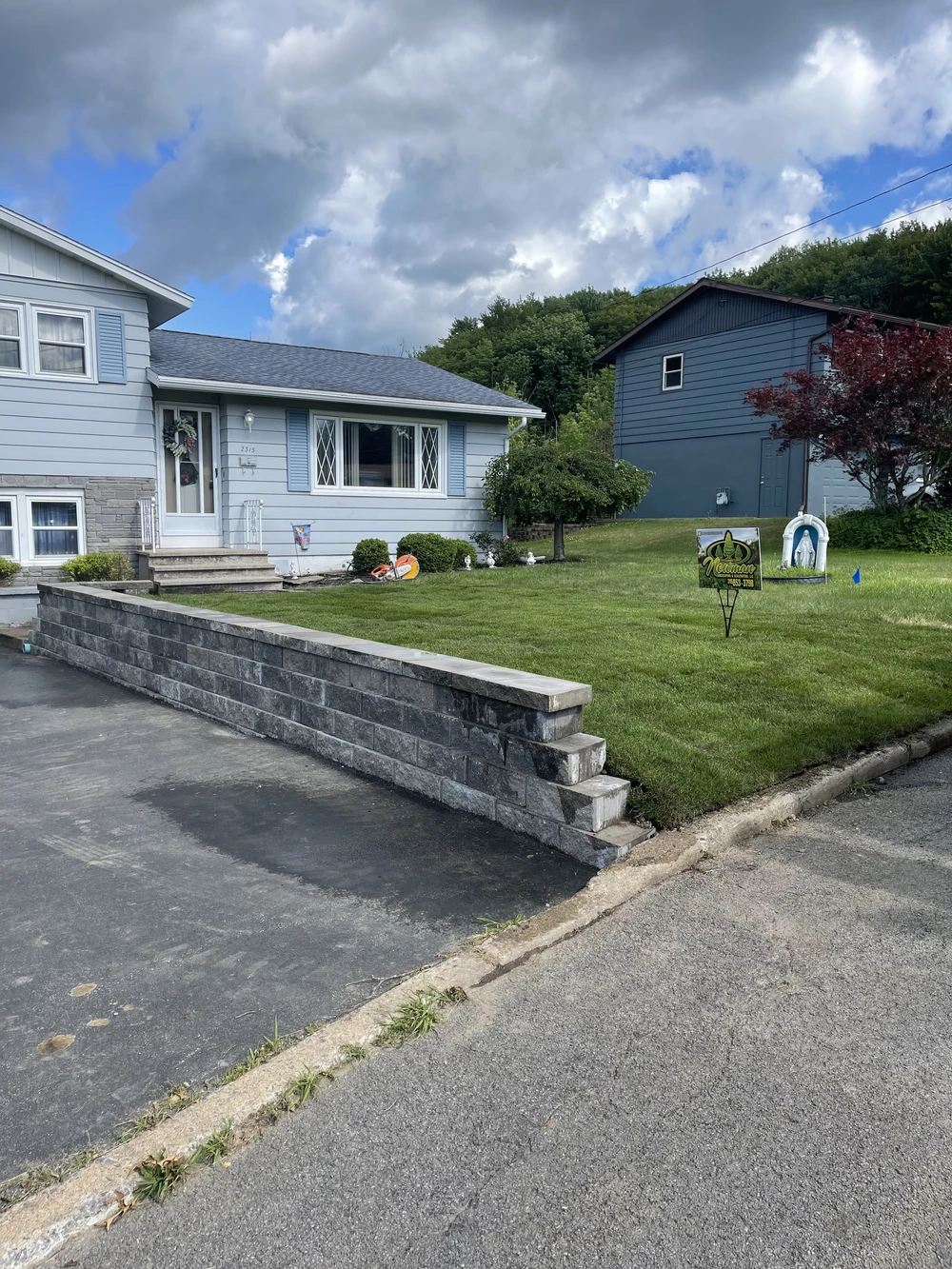
Conclusion
Now that the difference between soil weight and water pressure is clearer, it is easier to understand why so many walls fail after wet seasons. Water that gets trapped behind a wall can push, freeze, and soften the soil, and that combination can undo years of good-looking work. We at Newman Landscaping and Excavating, LLC, provide comprehensive services to help homeowners protect their slopes and outdoor spaces for the long run. If a wall shows staining, shifting, or new gaps, reach out to us, and we will help determine what a smart fix looks like.
